Sunday, April 16, 2017

Blog for April 16, 2017

Our Calgary bucket list…….


Our time here in Calgary is getting shorter and shorter, and we have a bucket list of things we yet want to do. Yesterday we planned for three separate activities on the list; the first for me to run through an area I had not yet seen, and for us the Glenbow Museum and the Calgary Tower. 

For those of us who work in the office, Saturdays are our preparation days, our P-days as the missionaries refer to them. I began my day fairly early so I could run through an area around the Glenmore Reservoir that I had not yet seen, except off in the distance. This route took me around the business end of the reservoir, if you will, over the dam and past the water processing plants, then on to the north side of the reservoir and the golf course.


The ice on the reservoir is beginning to melt in spots and is nearly ice free near the dam.


There is a construction project underway to improve the dam and the water treatment facilities. Unfortunately, the project completely blocks the view toward the downtown area and the river that flows out of the downstream side of the dam, which is what I had hoped to see.


In one of the blogs written last summer I described our visits to Heritage Park and taking a paddle-wheeler ride out around the reservoir. From a vantage point along the reservoir’s trail one can see where the paddle-wheeler is kept high and dry in the off season. 


At the completion of my run, I took the car to a car wash, then returned home to help Kathy finish cleaning our apartment. Shortly after noon we headed to the Glenbow Museum, which we have heard so much about. 

The museums here in Alberta are excellent and the displays are wonderfully done. The Glenbow Museum was no exception. Unfortunately, we were only able to see about half of the museum before the 5:00 p.m. closing time. The more permanent part of the museum features early Canadian history, especially Alberta, and displays of the trans-Canadian railroad and the changes it brought about, Prohibition and the expansion of the Royal Canadian Police Force to help enforce it, Canadian men and women who helped shape western Canadian history, and so on. The museum has special displays which change from time to time. We enjoyed the mineral exhibit, a very large display of African artifacts, and I especially enjoyed a special display of warriors through the years including weapons used, protective clothing worn, and changes of fighting techniques and weapons as warfare evolved from close combat to delivery of bullets and bombs from a distance. These displays included Japanese Samurais, Maori fighters, medieval knights, etc. and ended with a comparison of how wars are fought in more modern times and the technological advances necessitated by these changes.


Will it fit?
Be sure to read the sign
Curtiss Jenny Aircraft

As mentioned, the 5:00 p.m. closing time came much too soon and we had to leave the museum, but another of the things on our bucket list was very near by, viz., the Calgary Tower. We walked the one block distance to the tower and took the elevator to the top where the 360-degree view is ordinarily unlimited. Unfortunately, soon after we arrived the weather settled in and it began to snow, so our appreciation for the view from the tower was rather limited. Hopefully be able to return soon. We understand that the view at night is spectacular, especially during the week when the cleaning crews are working in the high-rise buildings and the lights are on. Anyway, I will include a few pictures of our visit to the tower. We had hoped to have dinner in the restaurant at the top of the tower but would have had to wait from 5:30 p.m. to 9:00 p.m. for the next available dinner reservation. We drove home in the snowstorm instead.


Canadian Mountie Bears at the base of the Calgary Tower

Today was bright and sunny and the snow quickly melted away so it has turned out to be a nice but cool Easter Sunday. We had a wonderful Easter service. We had previously invited the two missionaries in our ward for Easter dinner and the time is drawing near so I will leave very soon to go pick them up.

We hope you have had a wonderful Easter, which, if one truly understands what happened on Easter, is the most significant event to happen in the history of mankind. May I say how grateful I am for the wonderful gift of our Savior, for His love and teachings, for the atonement He made for the sins of the world, and most importantly, for His ability as the only begotten of the Father to willingly give up His life. Thus the bands of death were broken and we are given the opportunity to return to the Father and live eternally. The challenge, of course, is to live so that we may realize that great gift in our own lives and in the lives of our families. “For God so loved the world, that he gave his only begotten Son, that whosoever believeth in him should not perish, but have everlasting life.” John 3:16. I bear testimony of the truth of that statement.    

Sunday, April 9, 2017


Rabbits everywhere………

Our blog for April 9, 2017

I will start this week’s blog with a discussion of the rabbits in Calgary. Bear with me, it will get interesting.

Snowshoe Hares changing from white to brown in springtime

 When we first came to Calgary in December of 2015, we noticed there were quite a few white and rather large rabbits hopping around. They have huge back feet and are taller in the hindquarters than jackrabbits. In wintertime they are pretty much invisible in the snow except for their black tipped ears. Last spring, almost overnight, we noticed a sudden increase in numbers but they looked quite different; mostly white but with large patches of brown or grey. I asked and learned that these are indeed the same rabbits. They are Snowshoe Hares, which makes sense if you remember my comment above about their broad back feet which act like snowshoes to keep their feet from sinking into the snow as they run about. They do indeed gradually turn from white to mostly brown or reddish brown or grey as the weather gets warmer. We also saw smaller rabbits with shorter ears and much shorter legs. These I learned are feral rabbits that have escaped or were released (illegally) by their owners into the wild. On quite rare occasions one may spot a cottontail rabbit as well. So why am I telling you about rabbits; they are a huge nuisance to cities. Rabbits, well, breed like rabbits and they nibble on everything edible in the summer and the winter so trees, bushes, and gardens are at risk. They have almost no regard for humans and barely get out of the way as you approach. The rabbits in the picture are representative of the changes in appearance. We saw them on Friday while we were at the Calgary Temple. They were eating grass and whatever else they could find to munch on there on the temple grounds.

I continue to be very much involved in the process of placing new cars into service and recovering the older vehicles to prepare them for sale. The picture below is one of the Chevy Colorado trucks coming out of service. (It is so nice I am considering trying to buy it for myself despite it having a Canadian speedometer.) We met the two missionaries, Elder Owens and Elder Lowham, to deliver a new RAV4 and exchange it for their truck. Afterward we treated them to dinner at Cost Vida, which they said is their “favorite place in the whole world to eat”.

Elders Lowham and Owens and their truck to be sold

Speaking of preparing and selling cars, in as much as our time in the mission field is drawing to a close next month, this part of my job will gradually be taken over by Elder Sefcik, whom I have mentioned before as one of the senior missionaries in the office. He is also the housing coordinator but offered to learn this aspect of the vehicle coordinator job so that he will be able to teach the senior couple coming in June. They arrive too late for us to do the training. Elder Sefcik taking over this aspect of my job will lift a huge load from my shoulders, especially with still more new cars coming to the mission. This will allow me more time to focus on the repairs associated with car accidents, car assignments, car inspections, minor car repairs, oil changes, tires, car records, and car reports, and all other car related things except car sales. Yes, there is still plenty to do.

The vehicle coordinator job will be even larger for the next person. In much of North America missionary cars are equipped with devices called TIWI. These devices monitor car speed and car location, and our mission cars will be equipped with these devices in July. We will, of course, be long gone by then so it will fall to someone else to monitor the TIWI equipped cars. I am told this aspect of the job will add significantly to the vehicle coordinator’s workload so I’m definitely okay with not having to learn and oversee this.

Speaking of our replacements, they are Elder and Sister McNary who are also from Sandy, Utah, but not from our stake so we don’t know them. We had a very pleasant visit with them by phone during the week and were able to answer many of their questions about what they will be doing, what they should bring, where they will be living, etc.

On Thursday evening we attended the baptism of the son of some dear friends, the Larez family. They immigrated to Calgary from Caracas, Venezuela, about a year ago. They both served missions for the Church and are college graduates but found life too difficult in Venezuela to remain so came here to further their studies and make Canada their home. We have become very close to them and were delighted to be invited to attend the baptism of their son, Miguel. The following pictures are of them and little Miguel. 

Liliana, Bismark, Miguel, and Isabella Larez


Last night we had a very lovely time at dinner with Elder and Sister Wong and Elder and Sister Sefcik. And tonight we were invited to the home of our bishop, Bishop Keyes, and his wife. We were also able to meet some of their family who live in the area. Their son recently returned from one of the Mexico City missions. The Keyes have a lovely home which they bought a few years ago and have been extensively renovating. It was only a half a block from their old home so, while the move itself wasn’t a big deal, the renovations have been and the results are beautiful. The Keyes are pictured below.

Bishop Keyes and family

That’s about it for this week. We send you all our love and best wishes. To our good friends, the Downs, who are returning home from their mission in Mexico this week, may we say, “Well done!” Hope to see you soon and swap stories.

Sunday, April 2, 2017


General Conference and Transfer Week, and, oh yes, a birthday came and went…….

I am preparing this between sessions of LDS General Conference so it is very much on my mind. Unfortunately, the local community service TV channel decided not to carry the Conference as in previous years. Fortunately, the Internet provides a way to watch so we haven’t missed a thing.

This morning, and all of this past week, I have been able to run outside and am so pleased to be able to resume running out of doors. With all the snow that melted during the week, I decided to try the Glenmore Reservoir trail (asphalt) and was delighted to find it clear of snow and ice for the most part. As you will see in the pictures below, nothing turning green yet, but it will come. The trail along the shore of the reservoir is still muddy with some patches of snow.

Dry Glenmore Reservoir Trail - ready for use


The Weaselhead in early Spring


The trail immediately along the reservoir - muddy and not yet ready for running

It is so nice to have more daylight to enjoy. With the resumption of daylight savings time, the sun is now well up before we go to work and it stays light until well after we get home. By the time we go home in late May, it will again be light from around 4:00 a.m. until well after 11:30 p.m. I was recalling recently that the Calgary Stampede fireworks display this past summer didn’t begin until nearly midnight because it was not dark enough to enjoy it fully until then. And speaking of fully enjoying the fireworks, it didn’t quite happen that way for us; we were poised to watch it from our apartment building but decided we were more interested in turning in so we gave up and went to bed. I guess we are getting old.

Transfer Week

And speaking of old, my birthday was on Wednesday. Before the day was over I was tired and feeling pretty old. It was a long day. We had a group of new missionaries arrive on Wednesday morning and it is a part of my duties to go to the airport and haul at least some of them (and all their luggage) to the mission home. The remainder are driven by the mission president and the Assistants in their vehicles. After their arrival at the mission home, those of us who work in the office (housing, cars, supplies, finance, etc.) provide them the necessary training for how things are done in the mission and how we are there to help them with their work. Afterward it was back to the office to prepare things for transfers the next day. Kathy and I stopped on our way home and had a nice dinner at a restaurant we like and finally got home about 8:30 p.m.

On their travel day, the missionary day begins around 2:30 a.m. when they get up to finish packing, have breakfast, and leave the MTC in Provo to get to the Salt Lake Airport for their flight. This time their flights took them to Seattle where they had to change planes, and then continued on to Calgary. It makes for a long day for them, so having to sit through local training is just short of torture. It helps to have them take frequent breaks to stand and stretch and then resume, and have some snacks. This group did well. They are a smaller group so the Sisters were able to all stay overnight at the Mission Home and the Elders were taken to a nearby motel. On Thursday we gathered them up and took them to the Willow Park chapel to connect with their new companions and continue on to their assigned areas.

Arrival of new missionaries usually happens every six weeks. Though it not perfectly equal during each transfer week, for each arriving group of missionaries there is a corresponding number of missionaries who are headed home at the end of their missionary service (18 months for the Sisters, and 24 months for the Elders). Arrivals and departures trigger a general shift in missionary service locations for many of the others remaining in the mission and so they and their luggage are hauled (that would be me) to one of two exchange locations, Lethbridge and Calgary. At each location, they meet their new companions and have a chance to reconnect with those with whom they have served in previous locations. Once we arrive at the exchange points those being driven bail out of the vehicles and head directly for those they haven’t seen in awhile. All of their baggage and personal things are forgotten for the moment. To get them reorganized and on their way is a lot like herding cats, but it all works out in the end and usually there are only one or two bags remaining after everyone has left   :^) 

Transfer day is a time to also move cars. With all the potential drivers going south or coming north, it is a good time to transport the new cars to where they need to be and to drive the old ones back. Opening and closing of areas also requires some movement of cars. All of this car movement requires a great deal of advance planning and coordination. At the exchange points I end up having to look at some cars that need repairs or have issues that have not previously been brought to my attention. These present as, “Oh, Elder Thorley; we forgot to tell you about it before but there is something wrong with our car. Could you look at it?” I also usually end up doing a couple of curbside medical consultations as well, so it is a busy time.

Sometimes during transfers, as was the case this time, I also meet up with a person in the south mission who wants to buy one of the older cars and, for convenience, wants it brought to them to avoid the long trip to Calgary. Selling a car under these circumstances usually requires answering a number of questions since they have not previously seen the car, only the pictures. I end up having to show them that everything that is supposed to be there is there and completing the necessary bill of sale.

Fortunately, the Assistants to the President oversee assigning drivers and passengers to each of the cars and herding them to their respective rides. Also the Assistants and office staff (in Calgary) collect gas receipts and gas cards, apartment keys, and cell phones, etc. and make sure these get into the right hands. So, the bottom line – the hour between arriving and leaving at the exchange points is an extremely busy time for all concerned.

Easter Interdenominational Easter Choral Festival

In anticipation of Easter, the Calgary Stake hosts a number of choral groups from various denominations around Calgary. This has been a tradition in central Calgary for 10 years. Kathy and I attended the event last year and enjoyed it very much. This year we have the opportunity of singing with our stake choir. Each choir performs two numbers. I will try to get a couple of pictures of the event and include them at the bottom of this blog.

The choral groups sat in the middle with the audience on the sides and in the cultural hall overflow


Once of the choral groups performing their number


The choristers and their accompanists

At the Interdenominational Choral Easter Festival:
L to R: Kathy and I, Sis Peterson, Sis Bonus, Elder Ibanez, Elder Hatch. Middle row: Elder Tung, Elder Proctor, Elder Fox, Elder Cartrwright, Sis Caldwell, Sis Hatch. Back row: Elder Fish, Elder Smith, Elder Del Molino, Elder Schiel

I hope, wherever you are, that you have been able to listen to General Conference. The messages are so timely and the words truly inspired. It was wonderful to see President Monson take part, and announce five new temples to be built. As announced, membership in the Church will soon reach 16 million members. This is, of course, a result of missionary work. While Kathy and my roles are supportive in nature and not proselyting, we do get opportunities to share the message of the Restoration. Often the vendors with whom I work ask about what our missionaries do as they meet them dropping cars off or picking them up after the repairs, oil changes, etc. I am only too happy to oblige and tell them a bit about the work and the message our missionaries share, and then I challenge them to invite them into their homes.

Have a great week!

Sunday, March 26, 2017

Curling is harder than it looks on TV.........


Curling is harder than it looks on TV……

Some time ago a good friend who is the High Priest Group Leader in the Heritage Ward, Bob Bergland, asked me what I would like yet to do before leaving Canada. I told him that I have a Canadian “bucket-list” of sorts and one of the things on the list is to try my hand at the sport of curling. If you turn on the TV in the evenings and on weekends in Canada the major sports you are likely to see are hockey and curling. I have played hockey but had never tried curling.

Bob is a retired teacher and former professional football referee but is also really into curling. He belongs to a curling club so, knowing it was on my bucket list, he invited me to join him for an introduction to the sport. 


Bob has been active in curling since his youth, and has taught curling for years. On the drive to the club he asked how far I wanted to get into curling and I told him I wanted the full experience. He laughed and said, “I think you will find it a bit more challenging than you think. In an hour of ice time I will show you as much as I can.”

Curling looks easy on TV; you just push off, glide a bit, aim and release the rock and watch it smack someone else’s rock out of the way while trying to stay inside the bulls eye, right? Prior to coming to Canada, my exposure to curling was pretty much limited to occasionally watching it during the Olympics and, since it seemed to lack any “real” action, I found it to be pretty boring.


As I mentioned, curling is on TV here in Canada a lot. I mean a lot! Yes, there is a season, winter time mostly, which makes sense since it involves, - wait for it…..ice. Almost all restaurants have curling or hockey going on multiple TV screens; different games on different screens like in the States with football or basketball. I began to watch with greater interest and realized, hey, this is a serious sport. The finesse involved is really pretty intense. The release of the rock has to be just so, - just the right amount of speed, the right amount of gentle spin, and the role of the sweepers ahead of the rock to help control the spin and provide a subtle change of direction. The action is directed from the other end of the ice course by someone called the “skip”. He/she determines the strategy and directs play for the team. He/she is the 4th member of the team of four. Each team member over the course of the match delivers eight stones, two stones in each round, and the match comes to an “end” at which time the score has been decided. The final stone in each round is the most important one for the score for the round and needs to clear the opponent’s stone and end up closest to the eye.   

The goal, of course is, to deliver the closest rock to the center of the bulls eye, which is called “the house”. If you can deliver a blow to an opponent’s rock, called a “take out”, and knock it from the house and keep your rock in the house, you stand a better chance of having “the shot rock’ which is the rock that is closest to the center of the eye. The shot rock scores one point. Positioning your rock so that it blocks the opponent’s from a clear shot at the house is good strategy. You may also bump one of your team’s rocks so as to place it closer to the center of the eye, called the “button”. If you can clear all of your opponent’s rocks from the house, each of your team’s rocks within the hours scores a point, but only if all of your opponent’s rocks are outside of the house. Unlike darts, the rings of the house are not scored differently; it is only the closest rock(s) that score points.

Okay, now for the lesson. First you don a “slider” which is a slipper than goes over your shoe but just one shoe. This is the lead foot when you push off and glide; the other foot slides on the ice behind you. The lead foot is the left foot if you are right-handed and vice versa. This is where the lesson began poorly for me. The shoe on which you place the slider becomes treacherous as soon as you step on the ice; there is no traction with that foot. Next I will mention the “broom,” which is used when you “sweep” ahead of your teammate’s rocks. Well, as my lesson began, my broom was needed just for me to stand up and not fall! Bob demonstrated how you place the other foot, my right foot in my case (it helps to wear a shoe with good traction on that foot!) in one of two devices in the ice which are called “hacks”. The hacks are used to push off to commence the sliding motion needed to deliver the rock kind of like a runner’s “blocks”. As one pushes off, the other foot, the one wearing “the slider,” is extended out in front to provide balance. Oh yes, balance; it would seem easy in one’s mind to simply push off with one foot and glide with other foot, but this requires some coordination and timing, and, yes, some balance. I proved to be a true klutz at all of these.


First of all, my knees don’t bend as comfortably as they used to, so getting down into the crouch position is uncomfortable. Then the proper position is to crouch in such a way so as to have both knees inside of your arms (sort of like being a fetal position). Just for fun, try that if you are in your 70s. One arm holds the broom and the other is resting on the handle of the rock. The motion is begun by rocking back to some degree (with your knees in pain if you are old), and then pushing off with the right foot with sufficient force to carry you and your broom forward while pushing the 36 lb rock forward smoothly. As mentioned, this require some semblance of timing, balance, and coordination. None of that comes easy; I had no balance, no coordination, and no timing. My first few attempts were a disaster and I found myself falling to one side or the other. None of my attempts during the entire hour succeeded in coming close to the line, called the “hog line”, at which point you need to release the rock without going over the line. I should add, there was no chance of me going over the line as the distance from the back of the ice to the hog line is 10 meters (around 30 feet). Even the best of my glides succeeded in reaching maybe 5 meters or about half way. With a bit more practice I stopped falling but found that my glide did not seem to want to follow the centerline. All of this looked so easy when I looked about at the others on the ice.

Anyway, I did not get a good feel for the basics of the glide in trying for 40 minutes or so; but I wanted to get down to what I was truly there for, and that was to curl. Surely I would be better at that. The term “curling”, by the way, is the attempt to give the rock some direction. It is accomplished by a very gentle clockwise or counter-clockwise rotation of the rock, best done with a slight touch of the index finger as the rock is released. The direction of the rotation determines whether the rock moves to the left or the right, or if a straight-on approach is desired, there is no attempt at rotating the rock. Remember the “skip” is the person on the other end that uses the end of his broom/brush to indicate where the rock should be aimed and uses signals to indicate the speed (AKA the “weight”) or force applied to the stone and the direction of the curl to be attempted. The sweepers are the two teammates not involved in delivering the stone and not acting as the skip. They are polishing the ice ahead of the stone to influence the distance it travels, and they can influence the curl to some degree as well. This is all done without touching the stone. They follow the directions called out by the skip. They can also sweep ahead of the opponent’s stone if struck by a teammate’s stone (called a “take out”) to encourage it to glide outside of the house and thus out of scoring consideration.


So that is a short course on how to curl. I wasn’t very good at it, and I suspect it would take hours and hours of practice, maybe even years to begin to curl well enough to not embarrass myself. Truly it is not as easy as it looks on TV, but then neither is golf, bowling, or any other sport that appears to require “less” effort for that matter. Some skill, some knowledge, and lots of practice is required. Now when I see curling on TV as I am waiting for my order I can say, “Hey, I tried it; I respect it. I can now enjoy watching it.”

-------------------------------------------------

The week has been a blur. I coordinated repairs and detailing, took lots of calls from interested buyers (word is out that we have some cars to sell), showed cars, and sold cars; all while trying to keep up with calls from the missionaries with car problems, arranging oil changes, and looking ahead to where and how to place the new cars that have come into the inventory. Yes my job is cars. I am lucky I don’t have car nightmares. And speaking of cars, I was fascinated today as we prepared to leave our church parking lot to see a throw-back version of the Jeep I grew up driving on our ranch. I will include the picture. Yes, it is a brand new Jeep. 


Have a great week!

Sunday, March 19, 2017

The cold gives way to Chinook conditions.....


Blog for March 19, 2017

The cold gives way to Chinook conditions…..

Chinooks at this time of year are a mixed blessing; they are a welcome respite from the bitter cold but the melting conditions they bring also set up some problems. This week is a classic example of this; daytime melting brings wet slushy roads which have been previously treated with a mixture of sand and salt, thus the road spray coats everything with a yucky layer of grime. At night the freezing temperatures add a layer of frost to this grimy layer. Washing cars makes them look really good, unless, of course, one attempts to drive somewhere and the road spray covers the car all over again. The accompanying picture tells it all. You would never know this car had been washed a day or two before.  


Another problem presented by the thawing and freezing, unless there is continued sanding of the roads, freezing at night creates a treacherous layer of ice on the roads. The same is true of sidewalks. Yesterday morning I attempted to run the route I take during the summertime. I had hoped that the sidewalks and roadways would be sufficiently melted so that ice and snow wouldn’t be a problem. It was. I would run for a hundred feet or so and then have to stop and gingerly feel my way over a patch of ice. Oh well, consistent warmer weather is on the horizon (we hope). The street sweepers have begun the process of cleaning the roadways. Hopefully they know that Spring is nearing.

Friday was a very sad day for us. It was Elder and Sister Peppinger’s last day and now they are on their way home. Kathy and I wanted to send them on their way with a token of our appreciation so we prepared some bags of goodies for them to enjoy as they drive. We knew lots of well wishers would be stopping by so we decided to do something uniquely Canadian instead of a farewell cake; we bought variety boxes of Timbits. For the uninitiated, these are like donut holes and come in a variety of flavors and coatings. They are delicious and are sold in the “millions” of Tim Horton Restaurants which exist on nearly every corner of Canadian cities. They are even more plentiful than Starbucks in Canada. Anyway, we bought two boxes of 50 each, and despite the sign reading, “Limit 2”, they disappeared rather quickly. The attached picture is of a few of the moochers, including one Elder who has stitches over his left eyebrow, a souvenir acquired while showing a few wrestling holds to another missionary.
Elders Jones and Sondrup munching away. Elder Lee (left) saying, "Nope. I'm good."

Kathy will now move into the receptionist/mission secretary position in addition to her regular duties. I will also need to assist with her duties (as she has been with mine) by taking many more phone calls in addition to my regular duties (and phone calls). Our replacements are now in the pipeline but they won’t be arriving until late in June, which is 3-4 weeks after our time to leave. We offered to extend for a couple of weeks if they could come a couple of weeks earlier so they could get some training, but, since this won’t work for them, we will likely be leaving on May 30th as planned.

Kathy and I went to see a movie last evening, “Arrivals”. I liked it but it was truly weird and hard to follow. Kathy liked it considerably less than I did, I might add.


Anyway, have a great week. This was admittedly a boring blog. The work is not boring but the blog is! There isn’t time to be bored with the work, not with missionary accidents (fewer now that the weather has improved), more than a dozen cars in various stages of repair, prepping older cars for sale, and the process of selling them. Kathy, too, will be scrambling to keep up with her additional duties.   

Sunday, March 12, 2017

How to eat a TimTam.........


Blog for  March 12, 2017

How to eat a TimTam………

It has been a cold, cold week but filled with interesting things to do. Let’s start with how to eat a TimTam. We had heard of these cookies but had not tried them until some were given to us. TimTam’s are unique to Canada and so is the way you eat them. First you need hot chocolate, then you take a TimTam cookie and you bite off a small part on each end. Next you put one end in your mouth and the other end in the hot chocolate and suck the hot chocolate up into and through the cookie. The cookie soaks up the hot chocolate and you quickly but the cookie into your mouth and enjoy the rich chocolate taste. Yum! My own discovery - the cookies are good even if you don’t have any hot chocolate.
 

During the week we received some additional Toyota RAV 4s. Next week we will receive a few more and that should be all for awhile.

The week saw a few more missionary accidents. Subzero cold (Farenheitk) and snow do not make for safe driving conditions. We are, however, to have a major Chinook during the coming week and temperatures will be well above normal. That should take care of the snow and slick roads, I hope. After all, it is mid-March. We were certainly spoiled by the mild winter we enjoyed last year.

We learned during the week that a senior missionary couple is indeed headed our way and will eventually replace us in the office, but (isn’t there always a “but”?) they are to arrive about a month after we are scheduled to depart. We are hoping they might be able to come two weeks earlier and if so, we could remain in place for two more weeks in order to allow some overlap and some local training. Senior couples receive great training in the MTC but it does not fully prepare them for how things are done locally.

Last evening, together with Elder and Sister Peppinger, we were invited to spend the evening with a senior couple serving here in Calgary, Elder and Sister Wong. They are MLS (member-leadership support) missionaries and are working with the Mandarin Branch. They are Chinese and are from the Salt Lake Valley as well. Sister Wong prepared a number of Chinese dishes for us and I can safely say, what she prepared proved to be the best Chinese food I have ever eaten! We also had a mixed fruit plate, brought by the Peppingers, and I made a chocolate cheesecake, which was also well received. We visited and had a great time. The Wongs are doing a wonderful job; they are teaching English classes, Sister Wong is teaching sewing, but most of their time is spent visiting the Chinese members of the Church and encouraging greater activity and participation. The young Chinese-speaking missionaries are so grateful to also have a senior couple serving here.

Saturdays are our P-days and after our apartment cleaning and preparations for the coming week, Kathy and I try to get out and see things we haven’t yet tried or seen. We have mentioned earlier visits to the nearby Heritage Park where we have season tickets. One of the buildings at the Park is called Gasoline Alley and it is filled on two levels with antique cars. We have put off going there as it remains open all year and we wanted to see everything else first as the rest of the Park closes for the winter. We knew by reputation that is wonderful, and so it was. I have seen a number of museums displaying antique cars but this is the very best. I will share a number of photos below but it barely scratches the surface for what there is there to see.

One of my favorites - a 1931 L-29 Cord with front wheel drive. Only $3,000 back in the day when a Ford Model A was $300. Needless to say, not many of them were sold at that price, and then there was the Depression going on. Cord Motor Company did not survive. 


A 1932 Auburn. This was a V-12 cylinder vehicle and it sold for less than $1,000, but the Auburn Motor Company did not survive the Depression years. 


Early Mack and Benz trucks. 

A 1912 Buick delivery truck

A Depression era car which some families lived in for a time. This is a 1930 Nash Sedan.
Note the mattress and bed frame on top. The back end of the car had a chuck wagon box where the family kept their eating and food preparation items.
A Ford Model T truck. One of these used to sit rusting at my grandmother's when I was a kid. How I wish I had had the means and the foresight as a young boy to have bought it from her with the plan to restore it.

This was my favorite car. It is a 1905 Cadillac Model E. It looks like something a prospector or farmer would have used to do the dirty work around the place. 


This is a 1918 International Truck. Because of the engine cover design, it was known as a "coffin nose".  

Most of the cars displayed are from a private restoration effort funded by a local businessman, Ron Carey. All of the cars and trucks are in running condition and are lovingly maintained by a crew of volunteers.

This was a favorite as well. It was a car for the very rich. The driver would sit up front and the passengers in the back surrounded by rich wood and upholstery. 

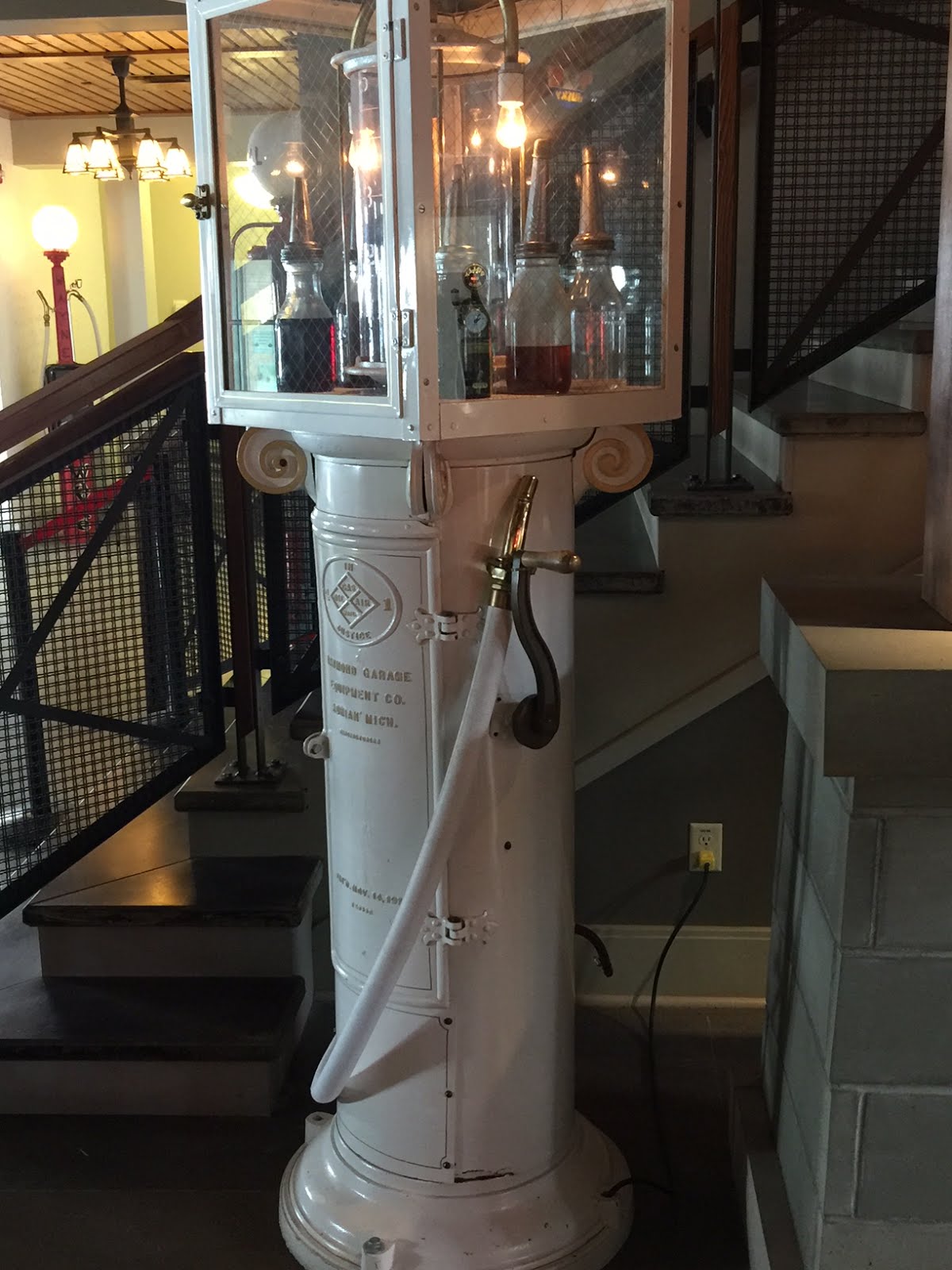
The collection also contains many unique gasoline pumps and many products and sinage from a host of petroleum companies.   

This gas pump was an all in one pump. The gasoline would be pumped up into the glass cylinder on top and then released down the hose to the car. This pump is unique in that it also had the oil, water, and air available in the same unit. 
   
And last, but not least, this was a display you could sit in - a stripped out 1952 Chevrolet with bench seats - a great vehicle to take one's date to a drive-in theater.  


Have a great week!

Sunday, March 5, 2017

Cows on the highway!


Blog for March 5, 2017

Cows on the highway! See below…….

We have had a very busy week, even spending some additional time in the office yesterday, -- our usual preparation day, all in an effort to keep caught up.

As nice as it is to get new cars to work into our fleet, each new car that arrives requires a significant amount of work even before it is placed into service. I have mentioned some details about this in the past so won’t do so again except to say, for each new car introduced into the fleet, an older car must come out of the fleet. Each older car then must undergo a process of inspection, arranging for needed repairs, oil change and tires (if needed), detailing, and pricing at which time the cars can then be advertised for sale. The advertisements trigger phone calls regarding the car’s details (even though the details are provided in the initial announcement), people then wanting to come to see and drive the cars, keeping track of keys, and then the actual sale process. The process of selling off the older cars is important as the money from the sale goes back into the pot of money the Church uses to purchase the newer cars.

The process of car replacement works reasonably well for the vehicle managers in each of the missions, but it is only one aspect of the job. Keeping up with all that is involved around missionary car accidents is another huge chunk of time. The more cars in a mission, the greater the number of accidents that happen, and, as I have previously stated, this mission has more cars than any other. Our winter weather conditions factor into this as well, being much more intense this year than last winter.  The problem is not just our missionaries being at fault, but others sliding into our mission cars. Each accident, regardless of who is at fault, sets in motion a process which often involves weeks of oversight until the car is back into service.  Sometimes this necessitates driving a temporary car out to a set of missionaries while the repair is underway. Such was the case this past week for Kathy and I; we had to take a loaner car out to Sparwood, British Columbia, where we met a pair of missionaries who were driven in from Cranbrook by another set of missionaries, also assigned in Cranbrook. We were able to treat them and the missionaries assigned in Sparwood to lunch and then see them on their way back to their areas. We have made this trip to Sparwood a number of times and love to take a secondary road through a beautiful stretch of road paralleling the Canadian Rockies. On our return trip, we encountered a herd of Red Angus cattle being driven along the road. Many of the cows were obviously pregnant and none had calves trailing them so I suspect they were being driven to a brood pasture where they can be monitored. During the trip we passed a number of pastures where there were many new calves so, “tis the season”.

Cows on the highway! Nanton, Alberta


Friday night we made our usual trip to the Calgary Temple with the Elder and Sister Peppinger. Afterward we went to Red Lobster and enjoyed having dinner with them. We will have one more week to enjoy this weekly event with the Peppingers as they will be leaving for home. We will surely miss them and will certainly miss having them in the office. Our workload will shoot up as soon as they leave as there still are no replacements in the pipeline for them (or for us in May).  

Several local people have told us about a great breakfast/lunch restaurant called, Cora’s. Yesterday morning we decided to give it a try and it was well worth it. Cora’s is apparently found all over Canada. The menu is quite varied and the food is so well presented. We had to wait in line for 20-30 minutes. Once inside we couldn’t help but notice arrangements of fresh fruit as one might do floral arrangements. The food was delicious. Kathy’s fruit and granola bowl was huge and she ended up bringing much of it home. I had apricot crepes with a kind of custard sauce; I had no trouble eating all of it! Oh, I nearly forgot; as customers leave the restaurant, there is a container with a piece of homemade fudge to take as a treat for later. 


Have a great week!